
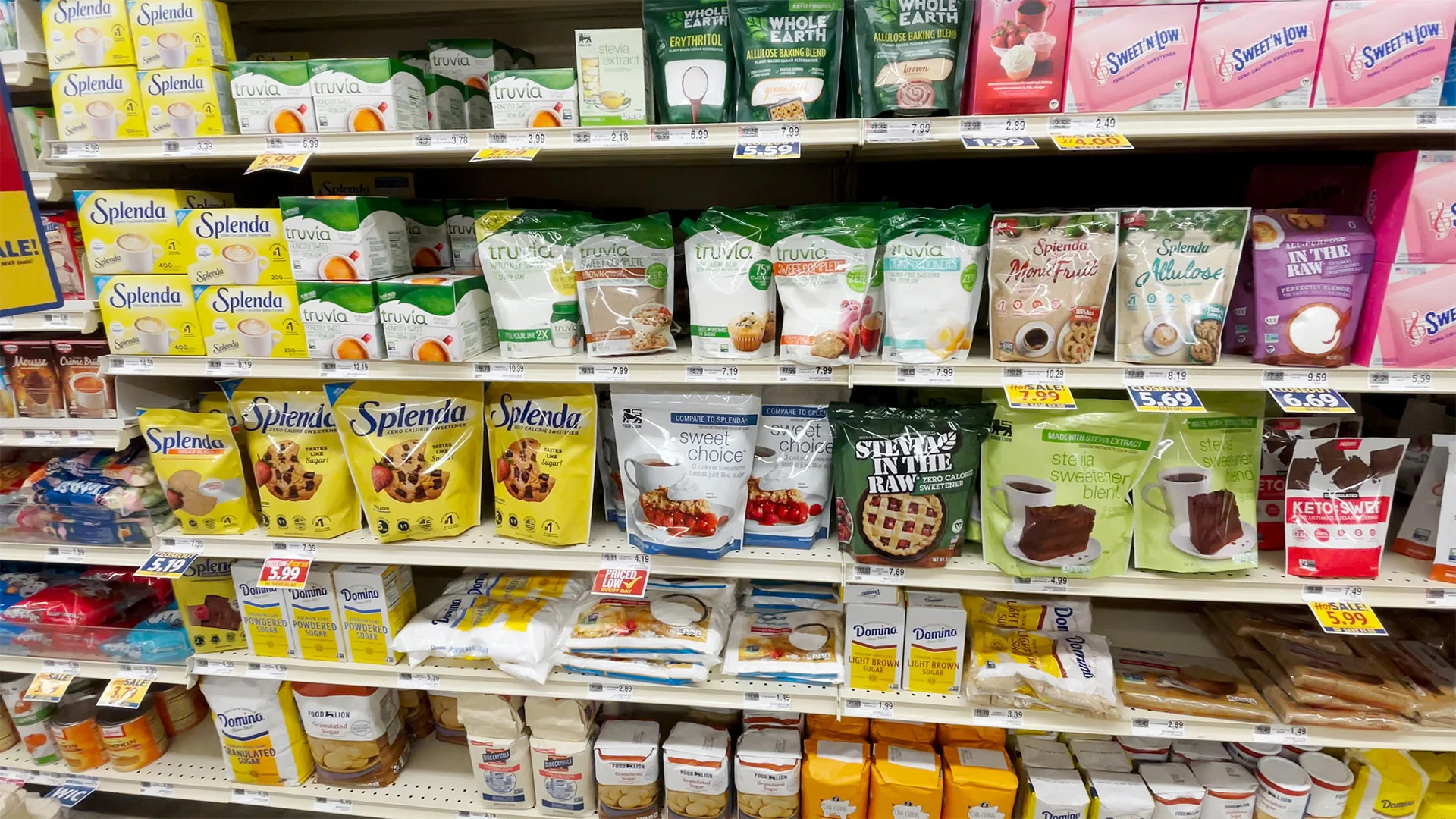
A new study from Chile found that some popular zero-calorie sweeteners have effects that last long after the first sip.
The study, which was published in the peer-reviewed journal Frontiers, found that sucralose and stevia, two popular sweeteners, altered the gut microbiome, reduced beneficial compounds produced by gut bacteria, and changed the activity of genes involved in metabolism and inflammation.
Researchers at the Universidad de Chile wanted to further understand the long-term effects of consumption of these sugars, specifically whether they disrupt energy metabolism and an increased risk of diabetes and cardiovascular disease.
Francisca Concha Celume, PhD, researcher at the Universidad de Chile and lead author of the study, said in a release that the team found it interesting that despite the growing consumption of zero-sugar additives, the prevalence of obesity and metabolic disorders haven’t declined.
“This does not mean that sweeteners are responsible for these trends, but it raises the question of whether they influence metabolism in ways we do not yet fully understand,” she said.
Testing sugar levels across generations
For the study, the researchers divided 47 male and female mice into three different groups.
One group was given plain water; the two others received water with either sucralose or stevia. The scientists designed the doses to resemble the typical amounts of the sweeteners someone would consume with standard diet.